Homemaking · November 10 · 7 min read
Why is my sourdough gummy?
A wet, doughy center is usually a loaf that was cut too soon, or one that never finished baking. The crust can lie.
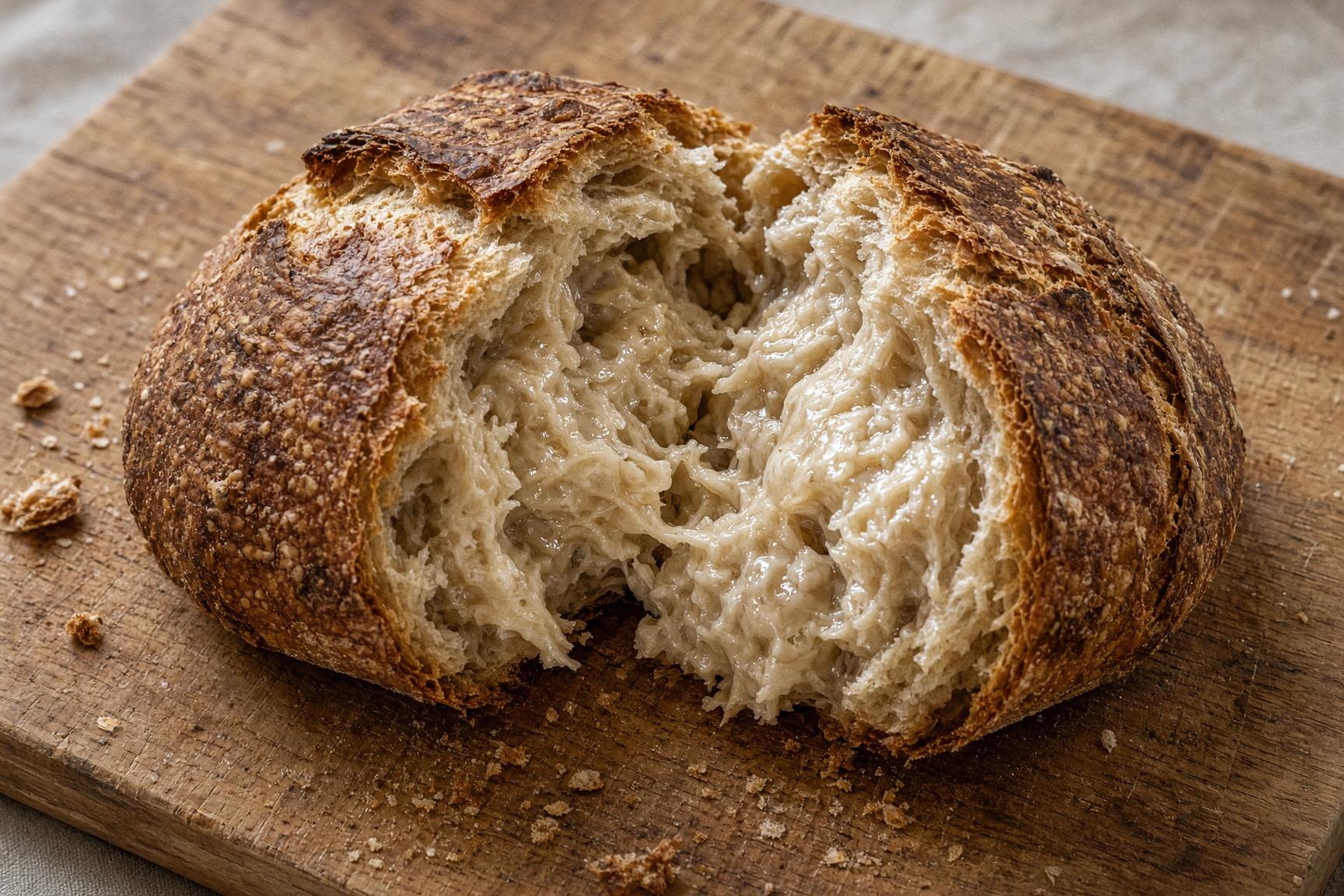
A gummy sourdough loaf looks baked from the outside. The crust is brown. The middle shines, stretches, and clumps on the knife. People call that underproofed, or raw, or ruined. Sometimes it is only impatient. The starch in the crumb has to cool and set. Cut the loaf while it is still a steam chamber and the middle behaves like paste.
The hour you skipped
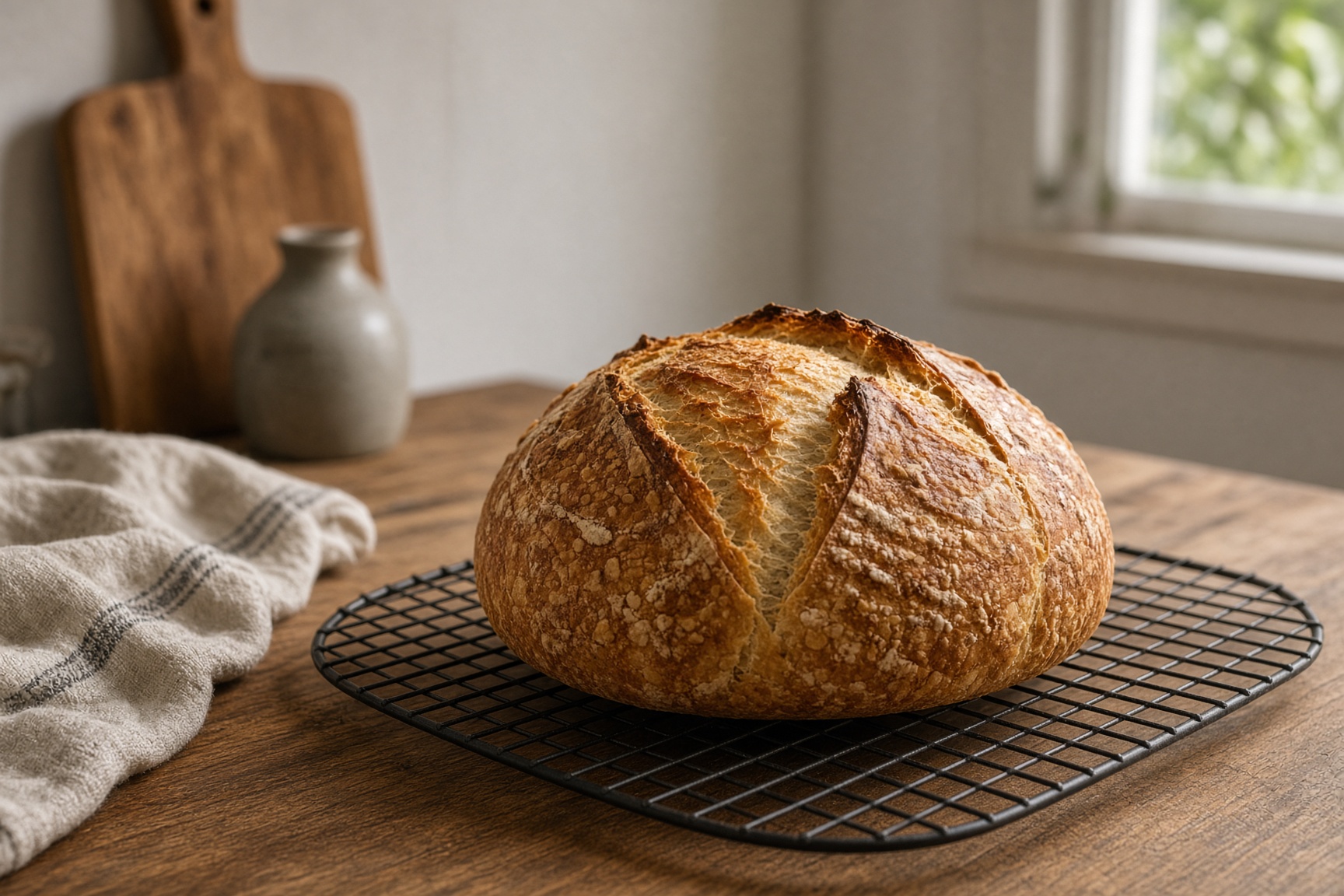
The country loaf here says to cool at least an hour before you slice. That is not manners. It is how the crumb finishes. If you already cut it and the shine is only on the face of the slice, toast it, or wait and cut again tomorrow. A truly raw center will not toast into bread. You will still see a doughy line.
If it is still gummy after it cools
Then it did not bake through, or it did not ferment long enough. A dark crust can happen before the center is done, especially if the oven runs hot or the loaf is larger than the one the recipe imagined. Bake until the crust is deep gold and the loaf sounds hollow when you tap the bottom. If you own a thermometer, the center of a lean sourdough loaf is generally finished around 205°F. That number is a check, not a different recipe.
Underfermented dough is tight and gummy even when the temperature was right. The country loaf should grow by about half during the bulk rise, and look airy at the edges, before it goes in the refrigerator. A cold kitchen takes longer. Pulling it early because the clock said three hours is how you bake a dense loaf with a shiny middle. Overfermented dough is a different failure. It spreads, the score does not open, and the crumb can be sticky because the structure collapsed. One is not enough time. The other is too much.
- Shiny only because you cut it hot: wait, or toast. Next time, leave it whole for an hour.
- A wet streak after a full cool: bake longer, or check the center with a thermometer.
- Tight, damp, and the loaf barely grew: the bulk rise was too short, or the starter was flat.
- Slack, spread out, and sticky: it fermented too long. Next week, shorten the rise or use a cooler spot.
A gummy loaf is still food if the center is merely moist. Butter it. If the center is raw dough, it belongs in the compost, not in a story about rustic crumb. The next loaf is the one that teaches. Write down how long the rise actually took in your kitchen, not how long the recipe hoped.