Sourdough · All year
Feeding a Sourdough Starter
How to begin a jar, how to know it is ready, and how to keep it alive between baking days.
5 minutes a feeding · Serves 1 · One jar, ready to bake when it has doubled
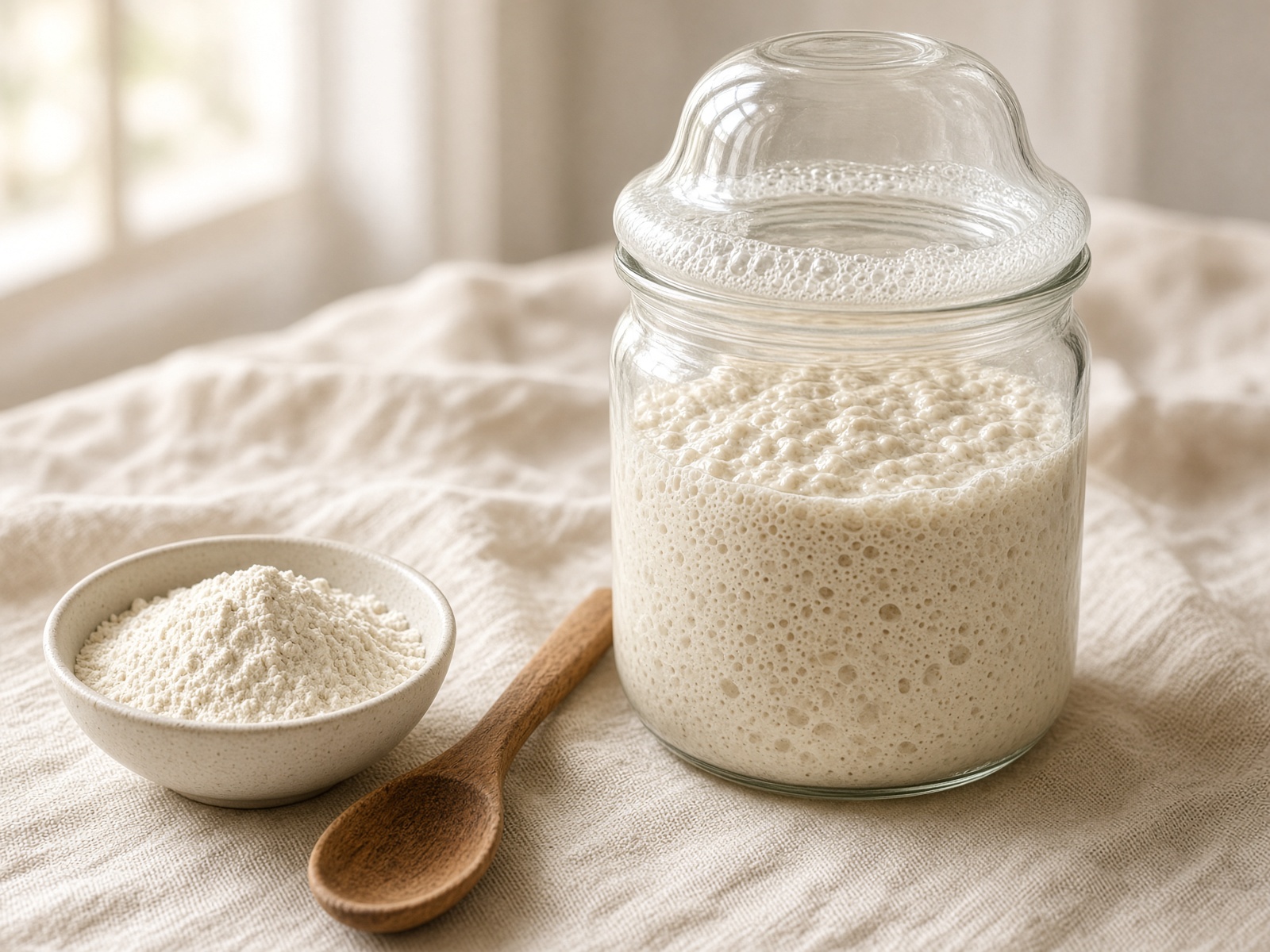
“See how the farmer waits for the precious fruit of the earth and is patient with it.”
Ingredients
- 50 g starter, once you have some; skip this on day 1
- 50 g flour, half whole wheat and half all-purpose if you can
- 50 g room-temperature water
Method
- 1
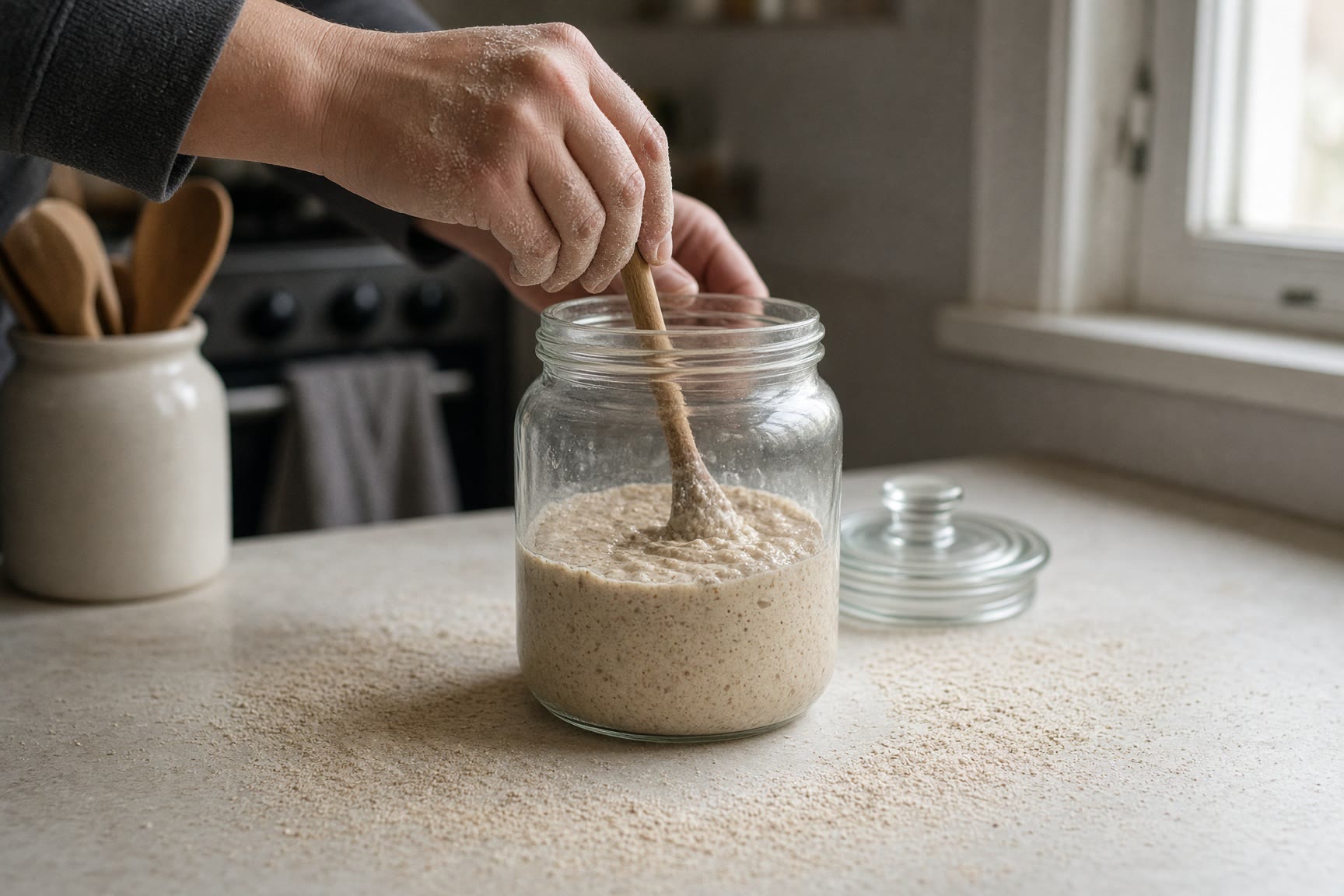
Day 1, from nothing: stir 50 grams of whole-wheat or rye flour with 50 grams of water in a clean jar. Cover it loosely, with a lid set on top but not screwed tight. Leave it on the counter. There is no discard yet.
- 2
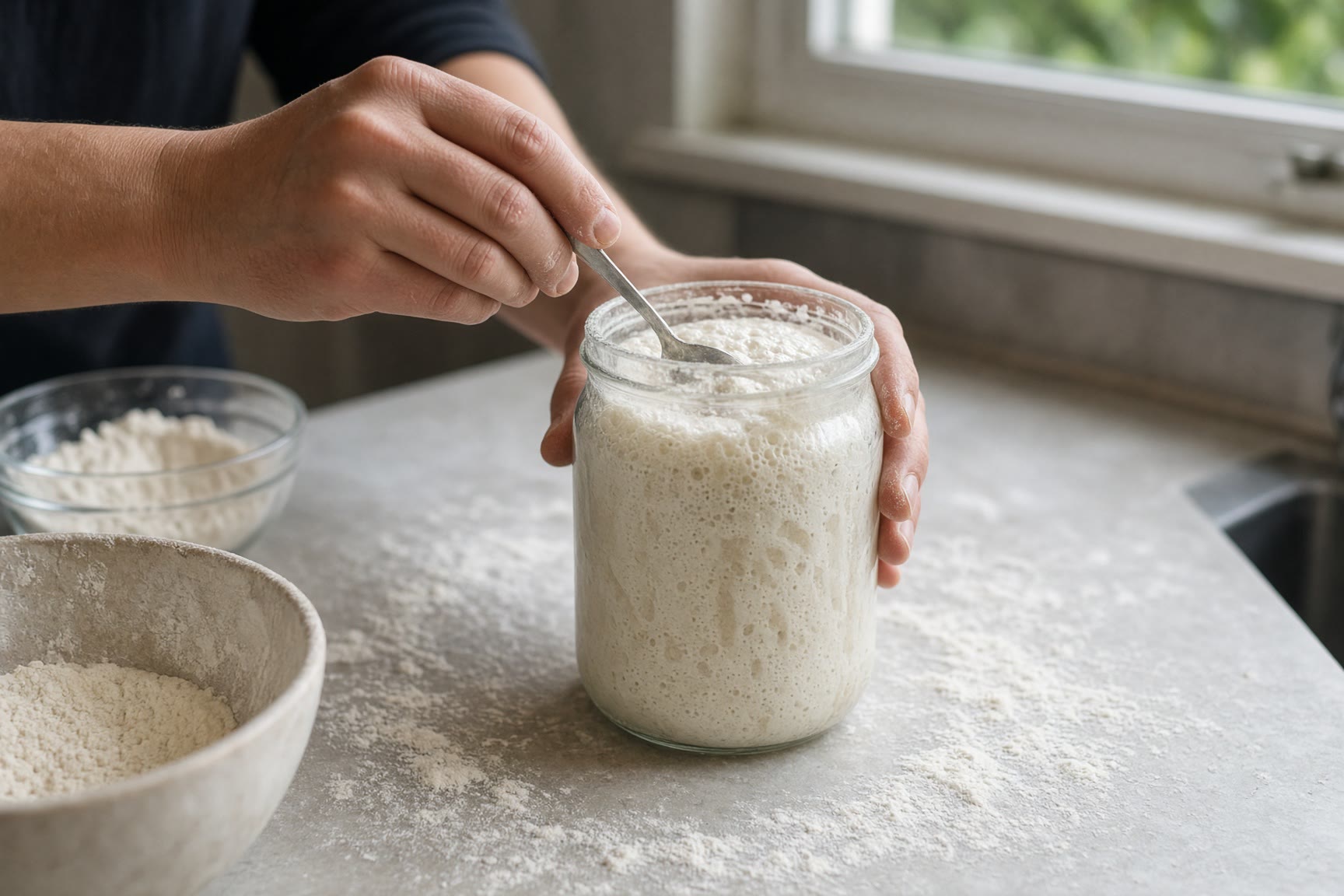
Days 2 through 6: each day, keep 50 grams of the mixture in the jar. Add 50 grams of flour and 50 grams of water. Stir. That ratio, equal weights of starter, flour, and water, is called 1:1:1. Compost the rest for the first few days. Once the jar smells clean and tangy, not rotten, you may save the extra in a covered jar in the refrigerator for pancakes and crackers.
- 3
The starter is ready to leaven bread when it reliably doubles within 4 to 8 hours of a feeding, is full of bubbles, and smells pleasantly sour, like yogurt. This often takes 7 to 14 days. A warm kitchen is faster. A cool one is not a failure. Keep feeding.
- 4
To bake the same day, feed 1:1:1 in the morning and use the starter when it has peaked: doubled, domed, and not yet fallen. For an overnight feed, use less starter so it rises more slowly, about 20 grams of starter with 50 grams of flour and 50 grams of water.
- 5
If you bake about once a week, keep the jar in the refrigerator. The day before you need it, feed it and leave it out until it peaks. Use what the recipe asks, feed the jar again, and return it to the cold once it is bubbly.
- 6
A gray liquid on top is hooch, from hunger. Stir it in or pour it off, then feed. Pink, orange, or fuzzy growth means the jar is spoiled. Throw it out, wash the jar, and begin again. Do not try to bake with it.
From the kitchen
- Use a scale. A starter can tell when the cups were hopeful.
- Put a rubber band at the height of the starter just after feeding. You will know it has doubled without squinting.
- If a new starter stalls for many days and your tap water smells strongly of chlorine, switch to filtered water for the feedings.
My note
Kept on this device, beside the recipe, for the next time you cook it.
Alongside this
Sourdough
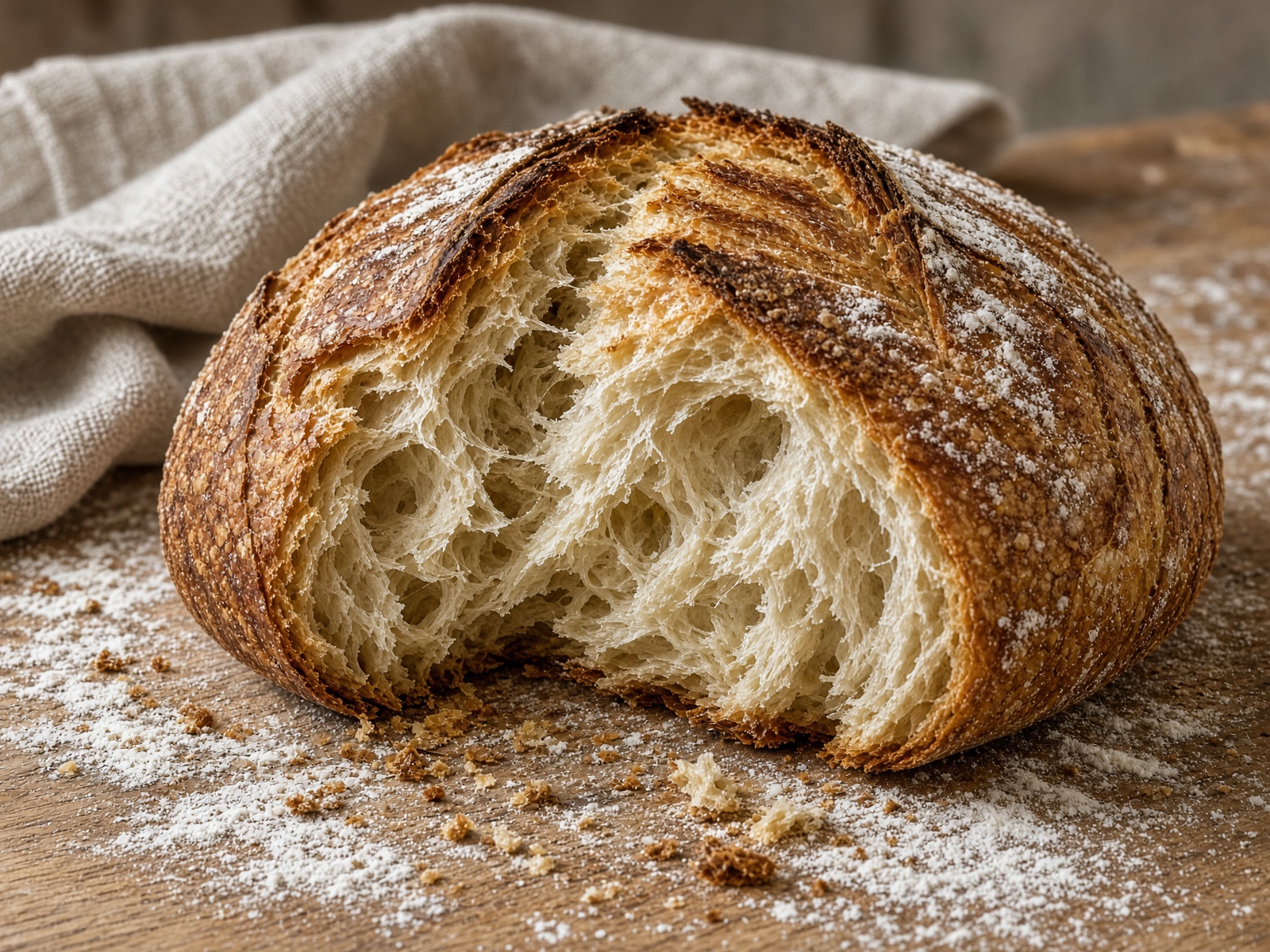
A Simple Sourdough Country Loaf
Flour, water, salt, and a living starter. The schedule is long. The hands-on time is short.
About 24 hours, mostly waiting
Sourdough
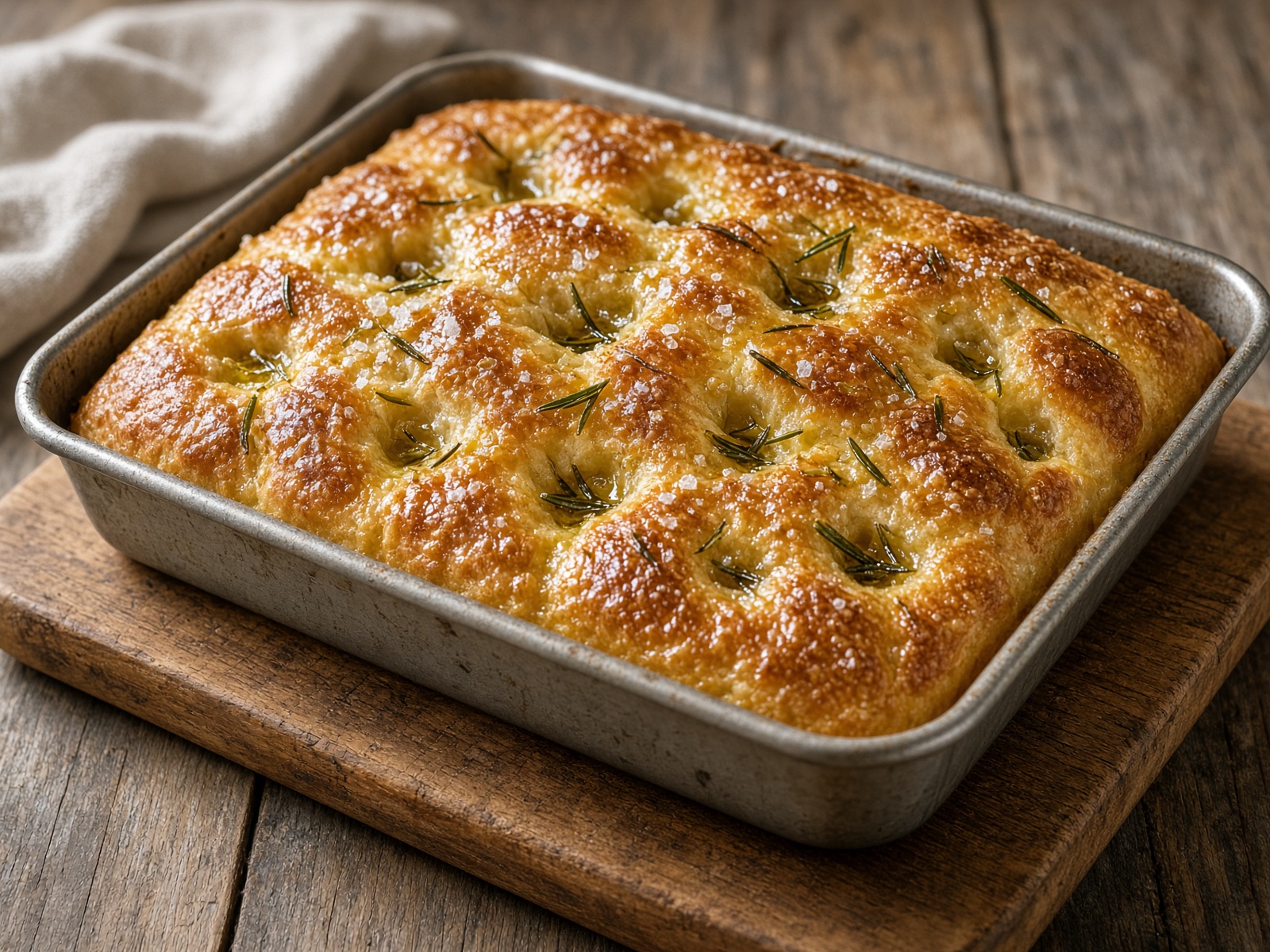
Olive Oil Sourdough Focaccia
A wet dough, a deep dimple, and enough oil that the crumb stays tender the day it is baked.
About 18 hours, mostly waiting
Sourdough
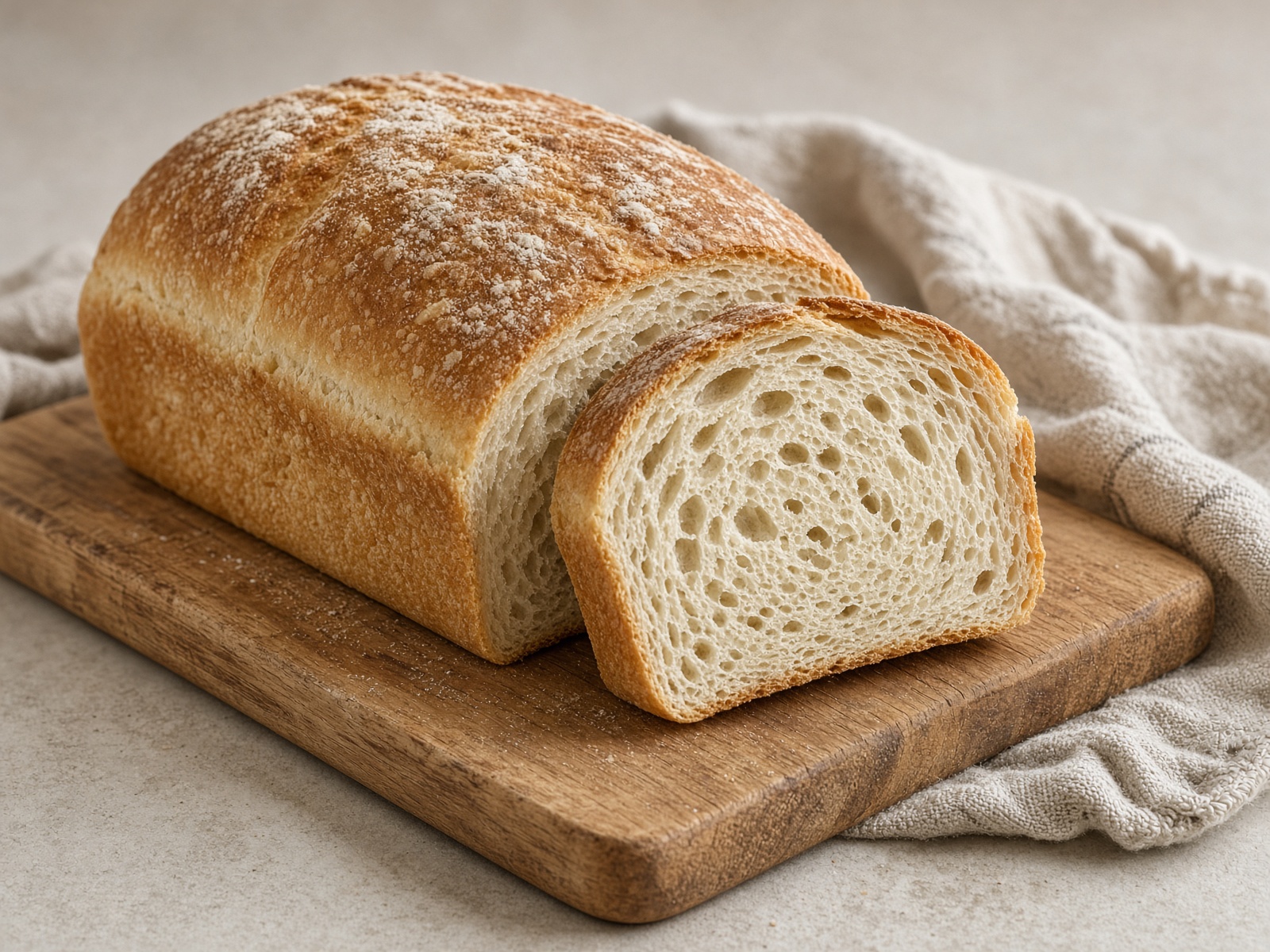
Soft Sourdough Sandwich Loaf
A pan loaf with a tender crumb, for toast and lunches, risen on a starter instead of a packet of yeast.
About 12 hours