Homemaking · November 10 · 6 min read
Active starter or discard: which does the recipe want?
One has just doubled. The other has not been fed. Using the wrong jar is how a loaf stays flat.
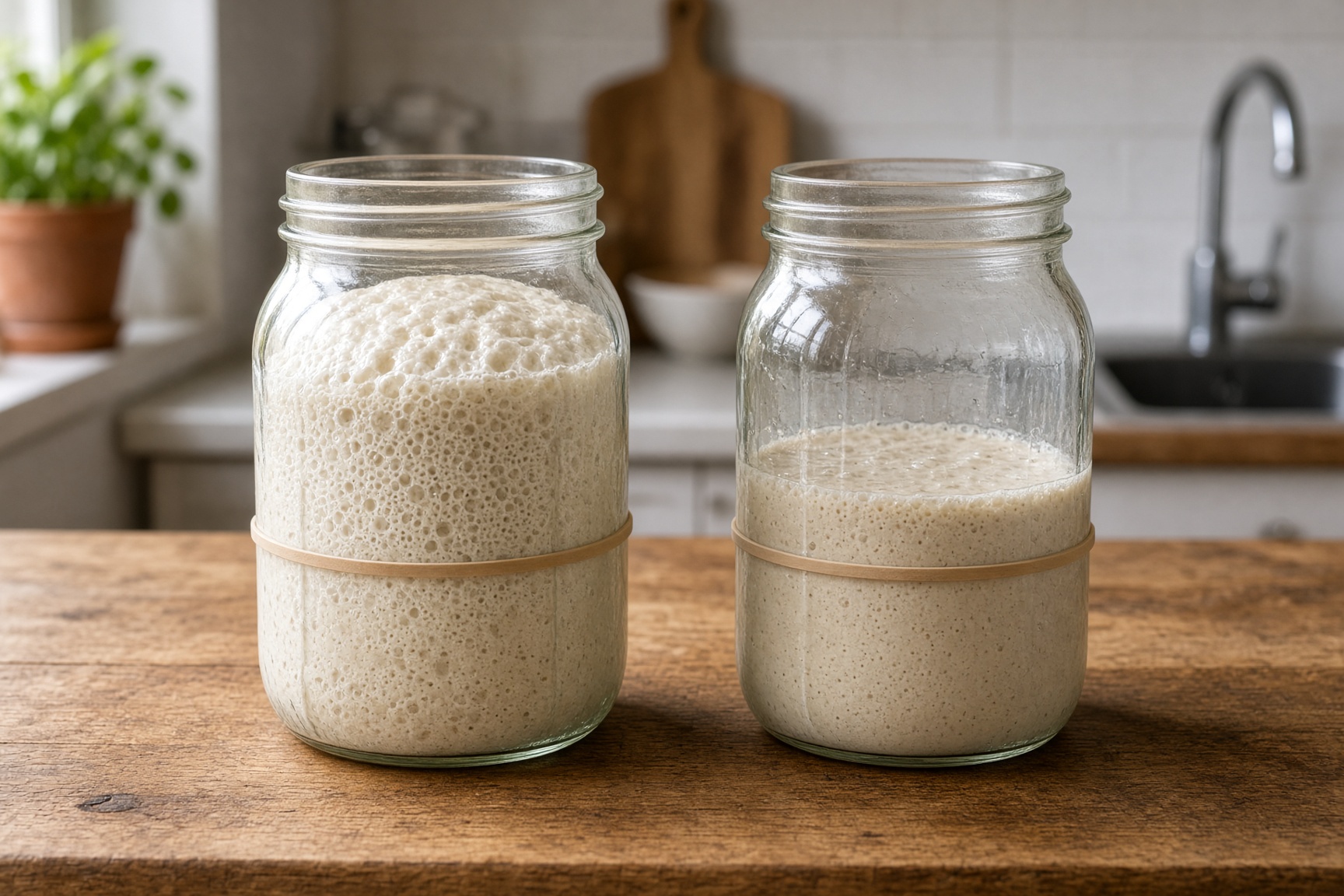
Recipes say starter and mean two different jars. Active starter was fed and has risen. Discard was not fed, or it was fed so long ago that it has fallen and gone flat. They are the same culture at two different times. The recipe cares which time.
How to tell by looking
Put a rubber band on the jar the moment you finish feeding. Active is when the starter has doubled above that band, the surface is domed, and the jar is full of bubbles. It smells pleasantly sour. Use it at that peak for the country loaf, for pizza dough, for rolls. If the dome has already fallen back down, you missed the peak. It is on its way to being discard. Feed it again if the recipe needs lift.
Discard sits at the band or below it. The surface is flat. There may be a little liquid on top. It is the jar in the refrigerator, and it is the cup you scraped out so you could feed the rest. The feeding page says the starter is ready for bread when it reliably doubles in four to eight hours. That sentence is the whole test. A spoonful that floats in water is a hint that the jar is full of gas. It is not a better test than the band. A stiff starter can be ready and still sink.
What happens if you swap them
- Active where the recipe said discard: usually fine. Pancakes may rise more. The tang may be milder.
- Discard where the recipe said active: the loaf or the rolls stay dense. This is the expensive mistake.
- A starter that doubled and then fell hours ago: treat it as discard, or feed it and wait.
- A brand-new jar that has never doubled reliably: it is not ready for the country loaf, even if it has bubbles today.
When a card on this site says active, fed, and bubbly, it means the jar on the left of that photograph. When it says discard, it means the quiet jar. Read the word before you pour. The oven cannot tell what you meant.