Homemaking · October 30 · 8 min read
How to Use Essential Oils Safely
A drop is not a dab of lavender from the garden. It is a concentrated oil, and it belongs in a measured amount of fat, or it does not belong in the jar.
This is how our household cooks, washes, and thinks. It is not medical advice, and it is not a substitute for a midwife or a doctor.
This is not medical advice. These are thoughts from our own experience.
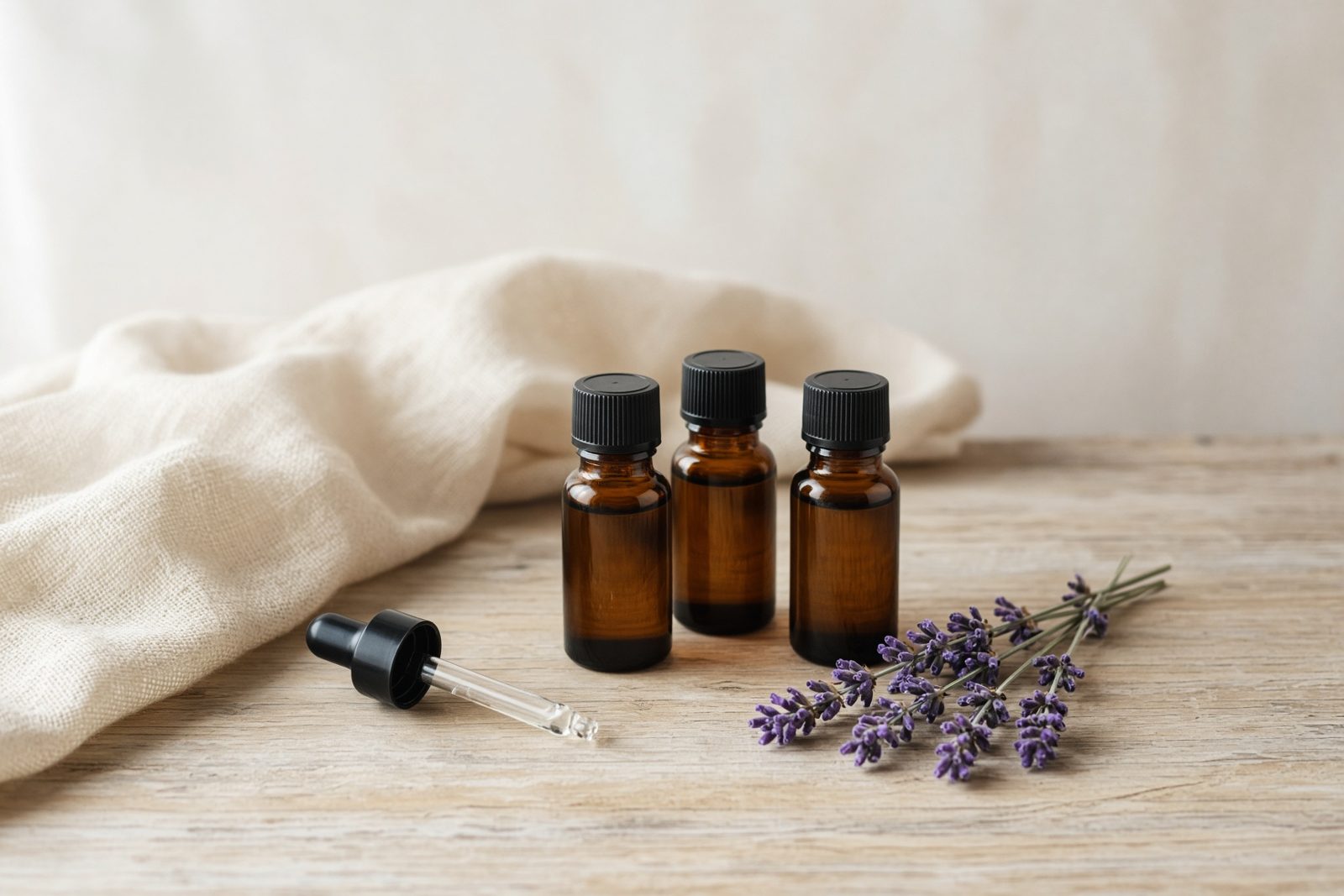
An essential oil is not the plant. It is the plant’s scent pulled out and packed until one drop stands in for a large handful of leaves or resin. That is why a pleasant bottle can burn skin, and why a recipe that says “add the oils you love” is not a recipe. This kitchen uses frankincense and lavender, and once in a while a single drop of tea tree in a mask for an adult. They go into tallow, olive oil, jojoba, coconut oil, or shea. They do not go into water, they do not go on a baby, and they are not swallowed.
Count the dose, not the mood
The number that matters is the percentage of the whole jar, not how many drops feel like enough. One gram of essential oil stirred into 100 grams of fat is about 1 percent. If you have no scale, treat 6 drops in 2 tablespoons of fat, about 1 ounce, as the ceiling for a leave-on product. Droppers are not all the same size, so the scale is the sure way and the drops are the estimate. A blog that says “10 to 15 drops” without saying how big the batch is has not given you a dose.
- Face, for a healthy adult: at or under 1 percent. The frankincense face oil on this site is 4 drops in 2 tablespoons, which is under that ceiling. Do not add more because the bottle looks plain.
- Body, leave-on: this kitchen stops at 1 percent. Some adult charts allow 2 percent for a short time. More oil is the usual way a homemade jar goes wrong, so we do not.
- Lips: unscented. Lips are skin you swallow from. If an adult tin is scented, 2 drops in the whole batch of several tins is the limit. No tea tree, peppermint, cinnamon, or clove on the mouth.
- Soap that will be rinsed off can carry a little more. The lavender soap already has its 10 grams weighed for that batch. Do not pour extra drops in because the pot smells faint.
- Children, babies, and pregnancy: no essential oil on the skin. The plain tallow is the family fat. A flower is not the same thing as the oil, and “gentle” is not the same thing as “optional to measure.”
How to put them in
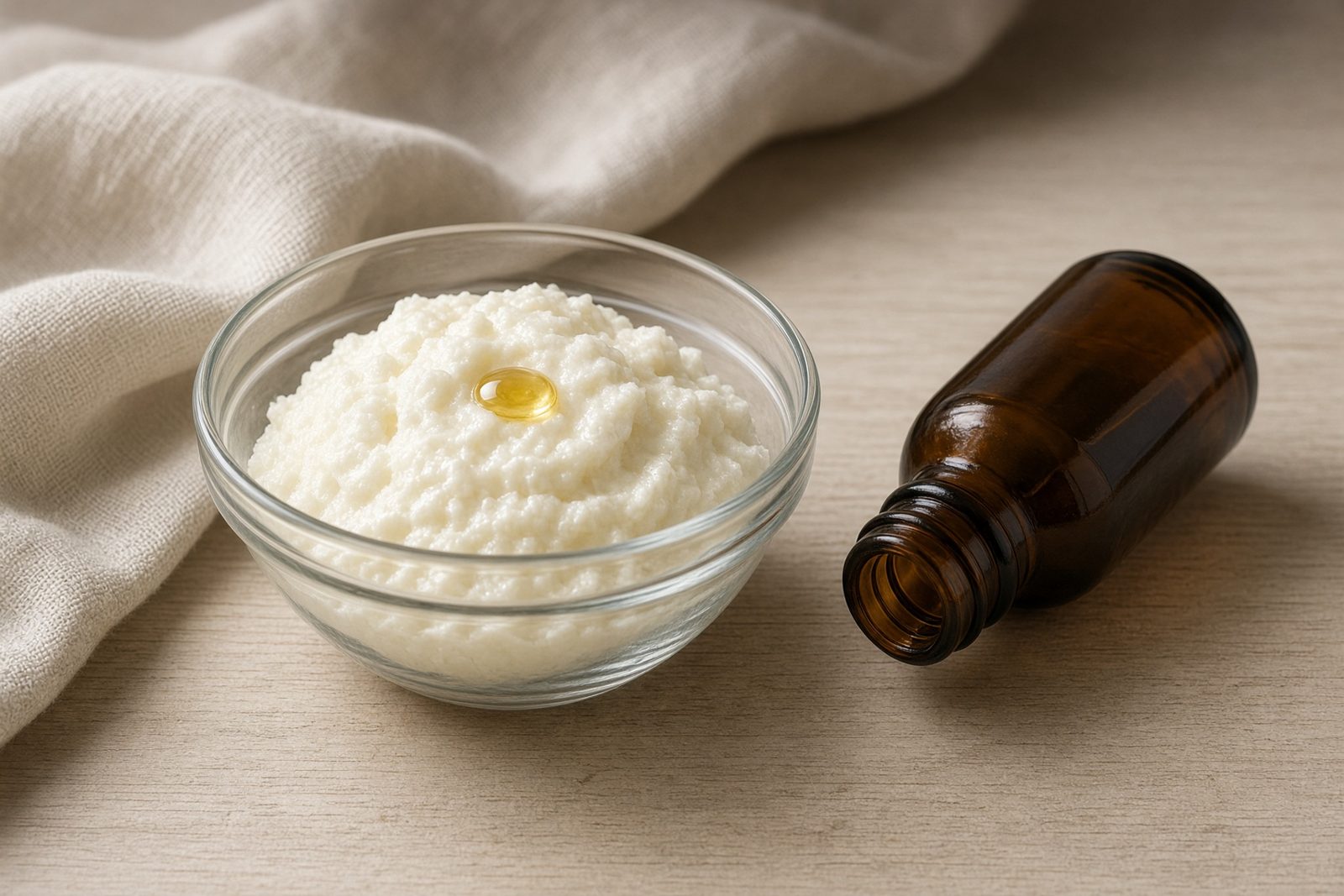
Melt the fat first. Take it off the heat and wait until it is warm, not steaming, or whip it and stir the drops in at the end. Heat drives the scent off and makes the oil harsher on skin. Stir until you cannot see a gold bead sitting on top. A bead is undiluted oil. Undiluted oil is how people get a burn from a jar they thought was mild.
Do not put essential oils in a bottle of water and call it a spray. Oil and water do not mix. The drops stay whole, and whole drops hit the skin. The same thing happens in a bath if the oil is poured on the water. If a scent belongs in a bath at all, it belongs stirred into a spoon of fat or soap first, and not for a child or in pregnancy. This house would rather you used the unscented jar.
Before a new jar is used on the face or on a large patch of body, put a little on the inner forearm and wait a day. Redness, itching, or a sting that stays means that jar is finished for you. Wash it off. Do not decide the skin will get used to it.
Oils this kitchen will not put in a jar
Cinnamon, clove, oregano, and thyme oil are harsh on skin even in tiny amounts. They do not go in a balm here. Cold-pressed bergamot, lemon, and lime can blister skin that then sees the sun. If a citrus oil is cold-pressed or expressed, do not wear it out into daylight. Sweet orange, and lemon or lime that were steam-distilled, are not the same thing, and people mix them up. When you are unsure, leave the citrus out.
Peppermint and eucalyptus do not belong on the face, and they do not belong in a room where a baby is sleeping. They are too strong for a small child’s airway. Tea tree is an adult spot oil, one drop in a mask, never swallowed. It is also dangerous for a cat who licks it or walks through a spill. Wintergreen is not a homemade-care oil. It behaves like a strong dose of aspirin, and it is not for children or pregnancy.
“Therapeutic grade” on a label is a sales phrase. It is not a safety grade. A pure oil can still burn you if the dose is wrong.
Eyes, mouths, and a spill
The eye balm has no essential oil in it, and none is added later. If a drop gets in an eye, do not reach for water first. Oil and water do not mix, and water can spread it. Flush with a plain fat, olive oil or jojoba or whole milk, and then with plenty of clean water. If it still burns, get help.
Do not swallow essential oils, and do not put them in a drink. If a child does swallow some, call Poison Control at 1-800-222-1222. Do not try to make them vomit. Keep the bottles capped, up, and out of reach, the way you keep the lye for the soap. A bottle on its side on a low shelf is an accident waiting.
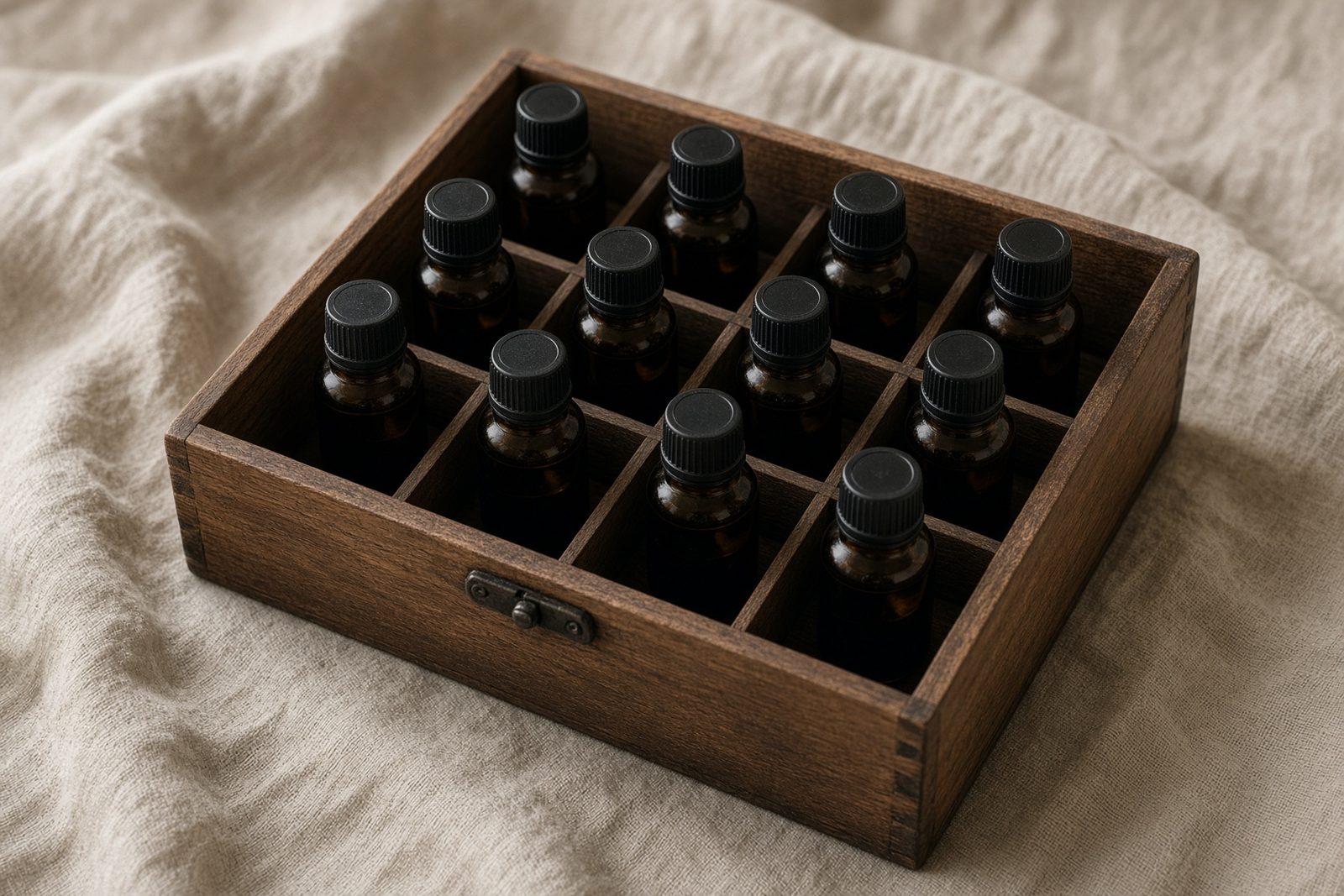
Store the oils in dark glass, cool, with the caps on. Citrus and tea tree oxidize. When a bottle smells sharp, like paint or nail polish, or it has sat for years in a sunny kitchen, throw it out. Oxidized oil is a common cause of a rash that a fresh bottle of the same plant did not cause.
The Care recipes already follow these limits. Use them as written. If you want the smell of lavender in the room, a sprig in a jar of the dried flower is enough. The oil is for a counted place in a fat, for an adult, and then the lid goes back on.
“A sensible person sees danger and takes cover, but the inexperienced keep going and are punished.”