Homestead · September 28 · 8 min read
A First Kitchen Garden, Kept Small on Purpose
Stewardship begins with a bed you can actually water, not a catalog you cannot finish.
The first garden usually fails in the imagination before it fails in the soil. We picture rows, a root cellar, and August abundance. Then June arrives with weeds and a week of travel and the tomatoes sulk. Genesis gives a better scale. The man was put in the garden to work it and watch over it. Work, and watch over it. Not conquer. A first garden should be small enough to keep.
What to plant when you are beginning
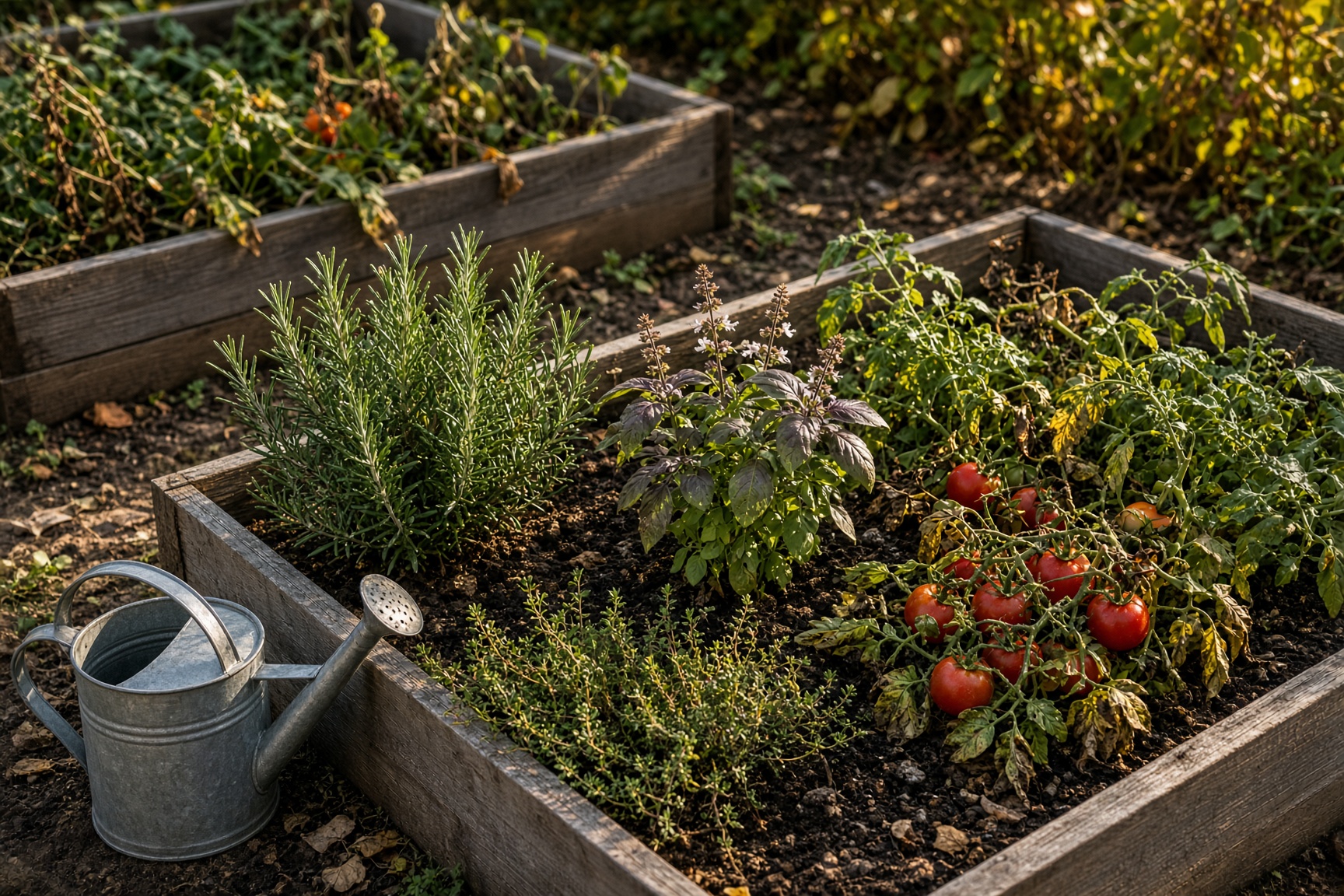
Herbs you will actually cut: basil, parsley, thyme, rosemary. Lettuce or another green you can harvest more than once. One or two tomato plants, not twelve. Bush beans, because they mind their manners. A hill of squash only if you have room for a plant that intends to move in. If you are in a warm climate, you already know the heat will outrun a northern calendar. Plant for your last frost and your real summer, not for a magazine from another state.
- Sun first. Six hours is a start. Eight is kinder to tomatoes.
- Water deeply, then let the surface dry. A daily sprinkle trains shallow roots.
- Soil before ornaments. Compost under the plants will outrank any pretty border.
- Write down what lived. A note in October is worth more than a new catalog in January.
In late autumn the work changes. Pull spent vines. Leave the roots of beans in the soil if you grew them; they fed the ground. Cover bare beds if you can, even with fallen leaves, so winter rain does not pound the soil into brick. You are not behind if the garden looks finished. Finished is a season, not a verdict.
“A failed tomato is not a moral failure. It is horticulture. Note the cause, thank God for the grocery store, and try one change next year.”
Grow something you will put on the table the same day. The point of a kitchen garden is the kitchen. A salad of your own tomatoes, however few, teaches a household that food is a gift with a history. That is worth more than a photograph of a perfect bed.