Homemaking · October 12 · 7 min read
Hospitality Without the Performance
An open door is a Christian habit. A perfect house is not the price of admission.
Somewhere along the way, inviting people in began to feel like hosting a small production. The right plates. A menu with a plot. A house that could be photographed from the doorway. Most of us cannot live that way, and Scripture never asked us to. Peter’s word is plainer: be hospitable to one another without complaining. The complaining often starts before the guest arrives, while we are still angry at the floor.
Hospitality, in the old sense, is making room. Room at the table, room in the evening, room for someone who did not earn a seat by being easy company. The Lord Jesus ate with people who could not improve his reputation. Luke 14 presses the point further: when you give a feast, do not only call the friends who can invite you back. That is not a ban on ordinary friendship. It is a warning against a table that only circulates among people who repay you.
What is actually enough
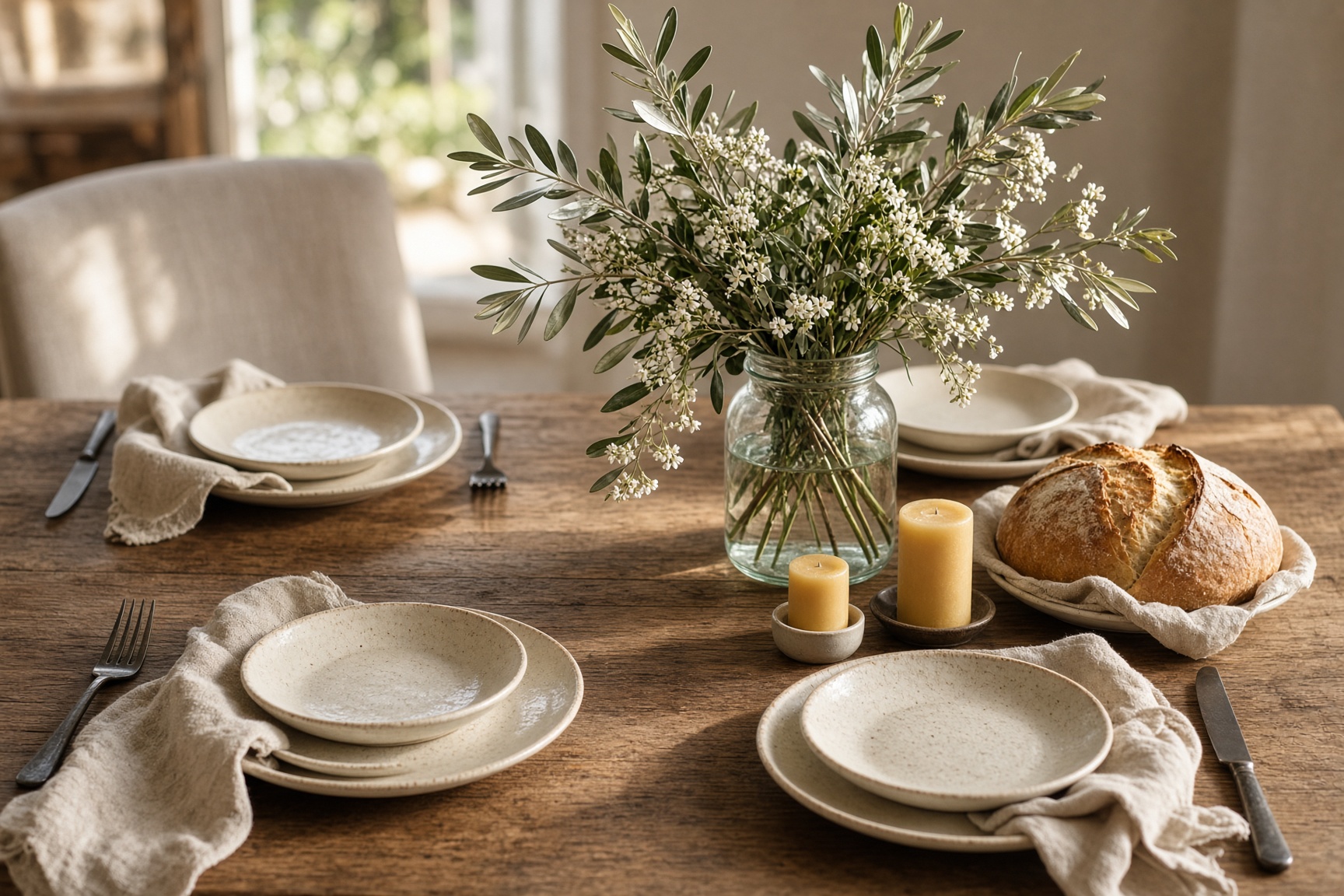
A pot of lentil stew and a loaf of bread is a real welcome. So is soup from Sunday’s chicken, or tomatoes and rolls when the garden is loud. Set the table before they come if you can, because a set table says you expected a person, not a problem. Then stop. Wipe the sink. Light a candle if you have one. Leave the rest.
- Choose one menu you can cook without a rehearsal. Repeat it until it is kind to you.
- Keep one shelf for guests: a jar of pickles, a honey, a decent tea. Not a museum pantry. A readiness.
- Put an extra plate in the stack as a habit, even on nights when no one extra comes. The habit trains the heart.
- Tell the truth about the evening. “We are glad you are here. The house is lived in.” People relax when you do.
“Clean enough to welcome is a standard of love. Spotless enough to impress is a standard of fear.”
If small children live with you, the house will show it. A guest who cannot abide a basket of blocks does not need a different version of you. They need a shorter visit, or you need a different guest. The household is not a set. It is the place your people are being formed, and formation is visible.
Practice once this month. Not a party. One person, or one family, and a meal you already know how to make. Pray for them by name while the pot simmers. That prayer is not the garnish. It is the hospitality.