Homemaking · October 29 · 6 min read
How to Steam Fish, Cantonese Style
清蒸鱼 is a whole fish, ginger, and scallion. The steam is short. The cloudy water on the plate has to go.
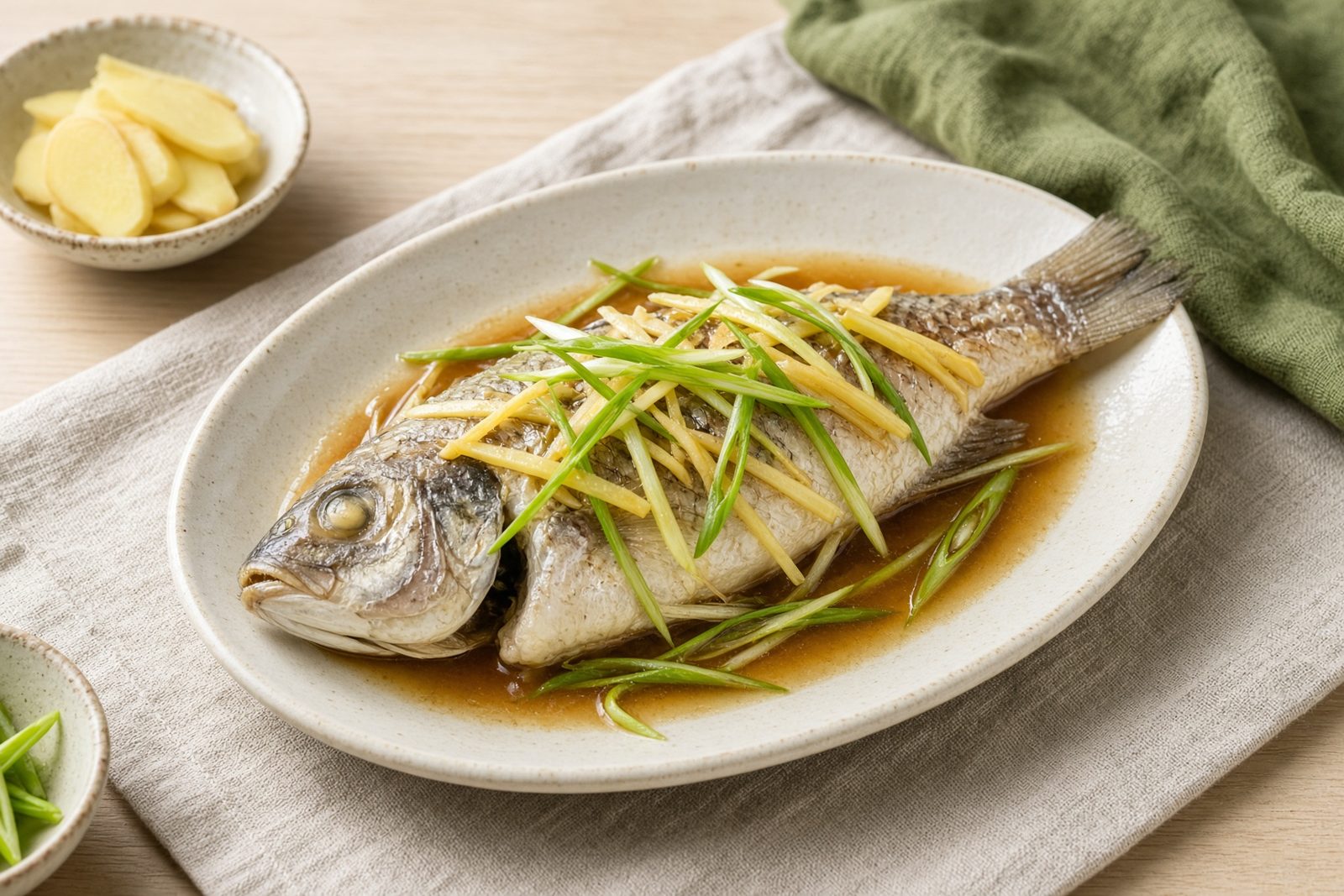
Cantonese steamed fish is one of the clearest ways to cook a fish. The Chinese name is 清蒸鱼, which means the fish is steamed plain and then finished, not buried in a sauce. You taste the fish, the ginger, and the scallion. If you want amounts measured out, the recipe is Cantonese Steamed Fish. This is the reason for each step.
Buy a whole sea bass, a branzino, or a small tilapia, about a pound and a half. Ask for it scaled and gutted. A scale left on will stick in the teeth, and no garnish hides it. Fillets are honest if a whole fish is hard to find. Fresh fish smells like the sea, not like ammonia. The eyes should be clear and the gills red. Pat it dry, salt it lightly inside and out, and cut two or three slashes on each side if the body is thick, so the heat can reach the bone.
Above the water, not in it
Set the fish on a heatproof plate. Tuck sliced ginger and the white parts of the scallion into the cavity, and lay a few pieces on top. Bring about an inch of water to a boil in a wide pot. The plate has to sit above that water, on a rack or on a small overturned bowl. Cover the pot. If the fish sits in the water, you are boiling it, and the flesh turns to cotton. Steam is a gentler heat. It cooks the fish without beating it.
A fish of this size usually wants 8 to 12 minutes. Start looking at 8. The flesh at the bone should be opaque and flake, about 145°F. Thin fillets are often done at 6 or 7 minutes. The usual failure is leaving it in because you are afraid of raw fish at the bone. Pull it when the bone looks done. Another minute past that and the flesh goes chalky, and you cannot steam it backward.
Pour off the plate, then finish it
When the fish comes out, tip away the cloudy liquid on the plate. That water tastes muddy. Sauce will not repair it. Then scatter ginger cut into matchsticks and the green parts of the scallion over the hot fish. They were not in the steamer the whole time, so they stay bright.
Stir a little soy sauce with a spoon of water and a pinch of sugar, and pour it over. Heat two tablespoons of avocado oil until it shimmers, and pour it over the ginger and scallion so they sizzle. That pour is the Cantonese finish. Avocado oil can take the heat. Olive oil turns bitter if you get it this hot. Eat the fish at once, with rice. It does not improve while it waits.
- Scale, gut, and dry the fish. Salt it lightly.
- Ginger and scallion whites go in the cavity before the steam.
- The plate sits above boiling water, never in it.
- Stop when the bone is opaque, about 145°F.
- Pour off the cloudy liquid before any sauce goes on.
- Scallion greens, soy, then the hot oil. Serve immediately.
“So they gave him a piece of a broiled fish.”
The risen Lord ate fish with his friends. A steamed fish is a plain way to put that kind of food on an ordinary table. If the first one is a little overdone, you have still learned the method. Next time, take it out sooner. When you want fermented black beans instead of the plain steam, that is a different dish: Black Bean Steamed Fish. The steam itself does not change.