Homemaking · November 10 · 7 min read
What exactly is “lye-free” soap
A tallow bar is soap only if lye had a job to do. The lye does not stay in the cured bar.
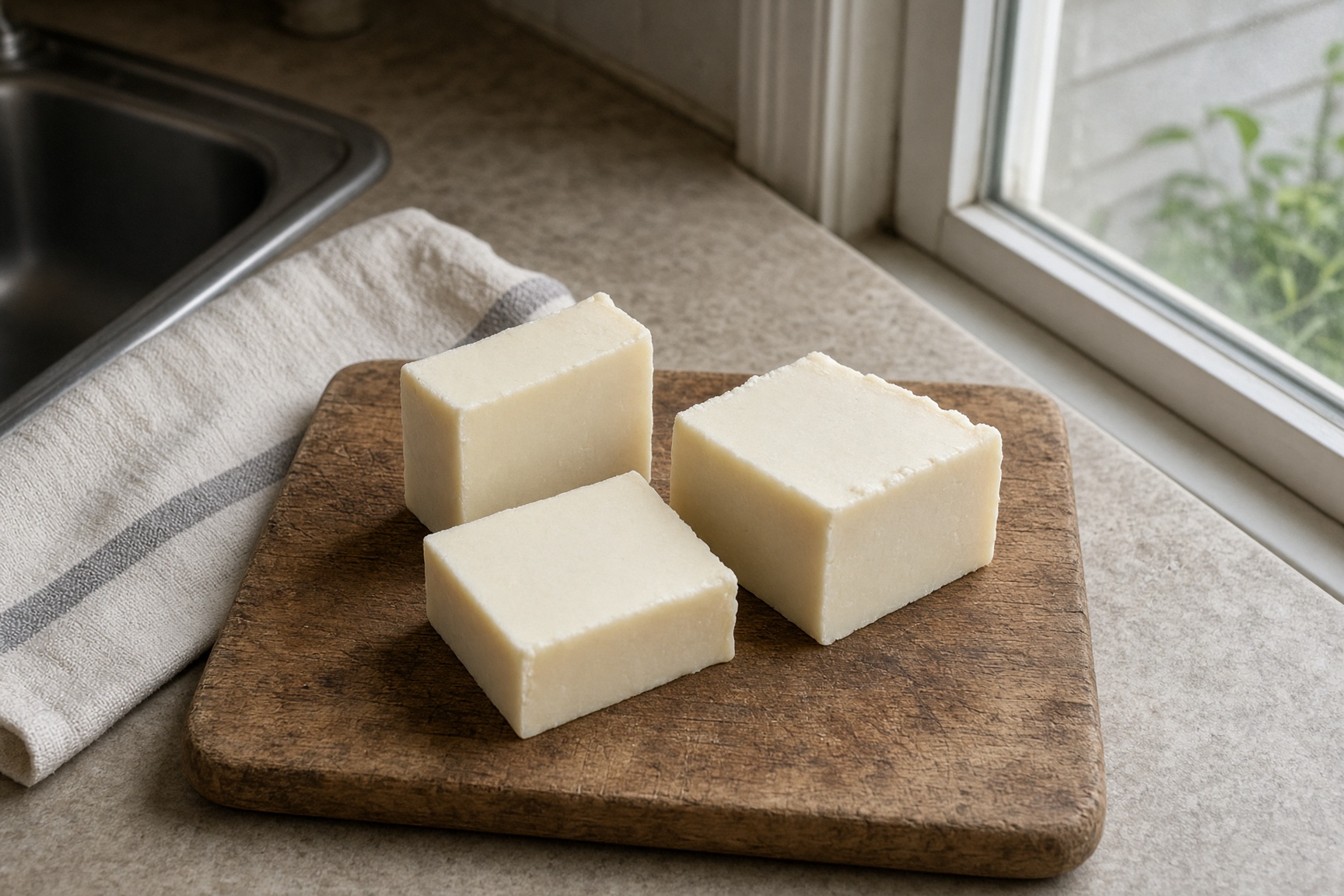
The phrase shows up on tallow bars at markets and in shops. Lye-free. It sounds as if the soap were made from fat alone, gently, with nothing harsh in the pot. That is not what the words mean. A bar that washes was made with lye. A bar that never met lye is a balm.
What a bar of soap actually is
Soap is not tallow that was poured into a mold and left to harden. Soap is a new substance. Fat meets a strong alkali, and the two become soap and glycerin. The reaction has a name: saponification. Tallow is the fat. Lye is the alkali. For a hard bar the lye is sodium hydroxide. For a liquid soap it is potassium hydroxide. Old household soap used lye from wood ash. That was still lye, only less pure and harder to measure. There is no way to turn tallow into real soap without an alkali.
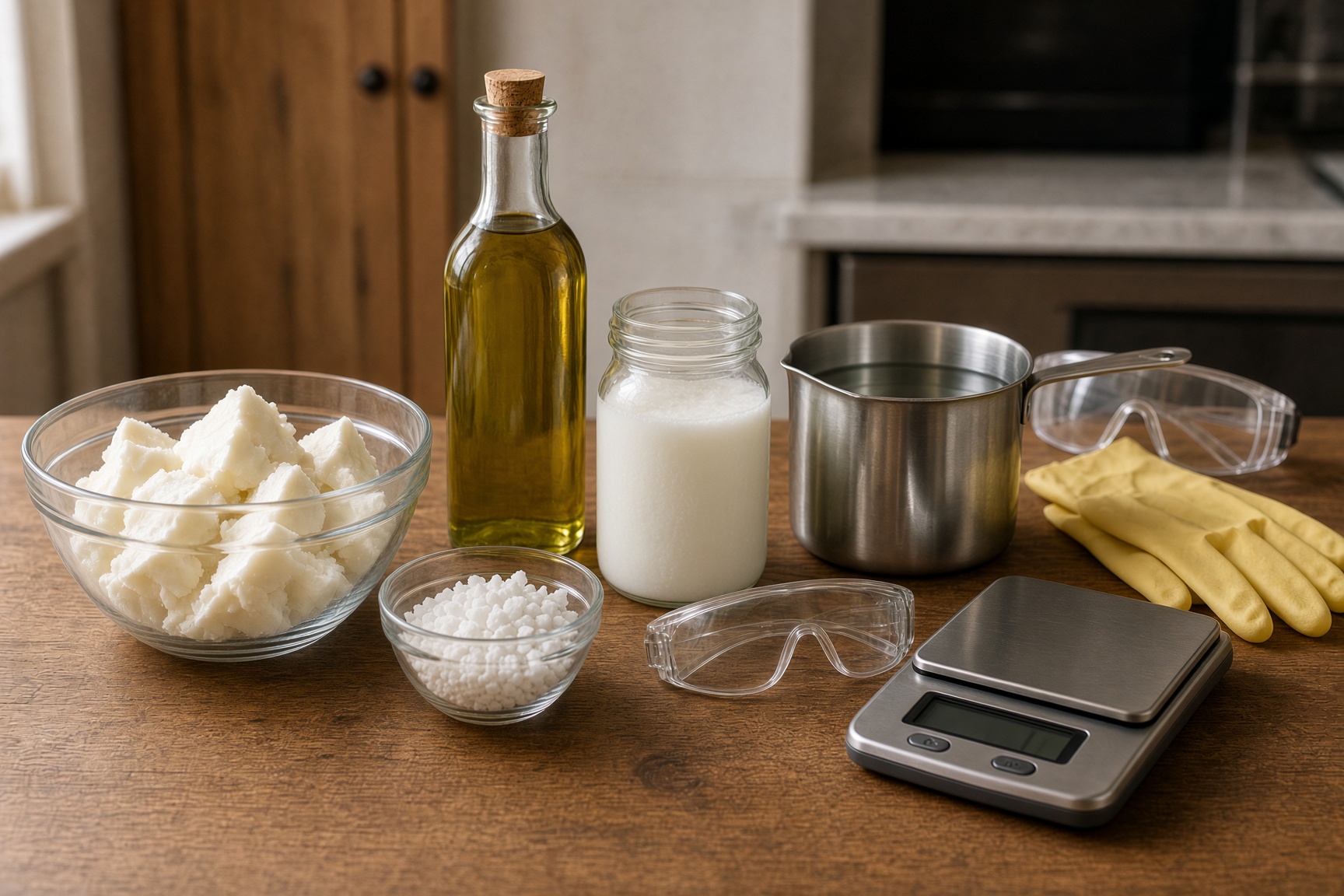
Lye itself is not gentle. Sodium hydroxide burns skin and eyes. Children and pets leave the room. It goes into the water, never the other way around. Aluminum and a drain opener full of metal shards do not belong in the pitcher. This essay is not the formula. The weights for this house live on the tallow soap page, and the lye number belongs only to that list of oils. Change an oil and you must change the lye. A cured bar and a pitcher of lye water are not the same object. Do not confuse them.
What “lye-free” is trying to say
In a bar that was weighed correctly and then cured, the lye is used up. It does not sit in the soap waiting to burn you. The maker can say the finished bar contains no lye and be telling the truth about the finished bar, while still having used lye to make it. That is the honest meaning of the phrase, when there is an honest meaning.
The other meaning is about who held the container. Melt-and-pour soap is already soap when you buy the block. You melt it, scent it, and pour it. You never touch lye. Someone at a factory did. The bar is not lye-free in the sense that lye was never involved. It is lye-free in the sense that the lye work happened before the kit reached your kitchen.
Saponified oils
A label that says saponified tallow, or sodium tallowate, is naming the soap, not a raw fat. Saponified olive oil is sodium olivate. Saponified coconut oil is sodium cocoate. Saponified palm oil is sodium palmate. Those words mean the oil has already reacted with sodium hydroxide. The lye is not listed as a leftover ingredient because it was the other half of the reaction, and as lye it is gone.
A handmade label sometimes lists the inputs instead: beef tallow, olive oil, coconut oil, sodium hydroxide. A shop label lists the outputs: sodium tallowate, sodium olivate, sodium cocoate, glycerin. Same chemistry, two ways of writing the jar. Potassium tallowate means the alkali was potassium hydroxide, the liquid-soap lye, which makes a softer soap.
If the label also lists plain tallow or plain olive oil beside the saponified names, that extra fat was left unsaponified on purpose. Soap makers call it a superfat. It is there so the bar is milder and less likely to dry the skin. The tallow soap on this site is written at about a 5 percent superfat. The leftover fat is not a sign that the lye was skipped. It is a sign that a little fat was spared.
A tin of tallow is not a bar of soap
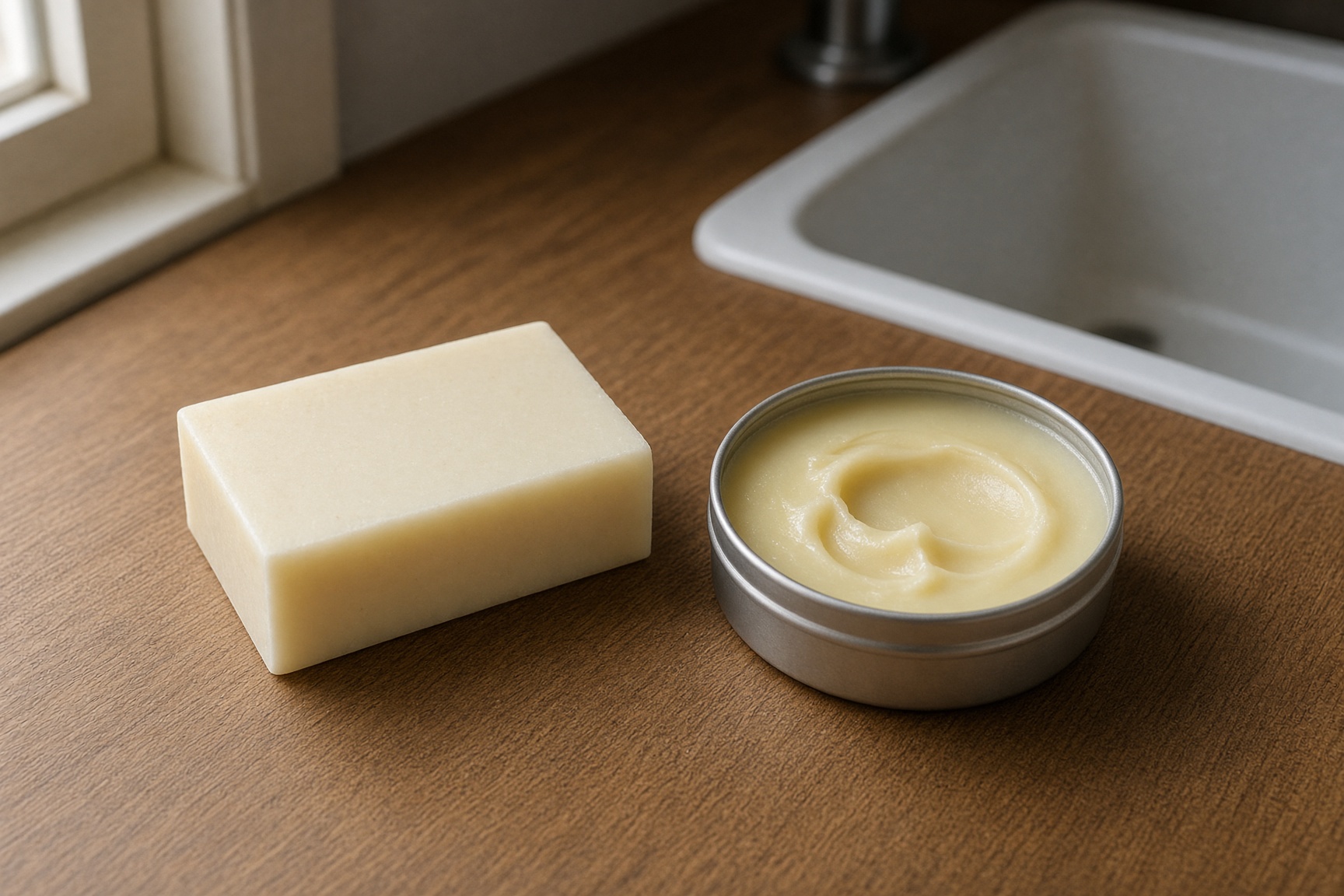
Whipped tallow, a lotion bar of tallow and beeswax, a salve in a tin: none of those met lye. They can soften dry skin. They will not wash hands or a dish the way soap does. In warm water a true soap lathers and rinses. A balm melts into grease and leaves a film. If a “tallow soap” does that, and the ingredient list is only fat and wax, with no saponified name and no lye, it is a balm wearing a soap’s name.
- Sodium tallowate, sodium olivate, sodium cocoate: the oils were made into soap with sodium hydroxide.
- The oils listed, plus sodium hydroxide: a handmade label written as what went into the pot. Same soap after the cure.
- Potassium tallowate: soap made with the liquid-soap lye. Softer.
- Only tallow, oil, and beeswax, and no saponified name: not soap. A balm.
Buy the bar that tells you which one it is. “Lye-free” is a mood on a wrapper. Saponified tallow is a fact. The fact is the one that washes.