Homemaking · November 10 · 6 min read
Why biscuits need cold butter
The flake is steam. Warm butter melts into the flour and you bake a cake.
A tall biscuit is not a mystery of the South and it is not a softer brand of flour. It is cold fat, in pieces, inside a dough that was not fussed into a paste. In the oven the water in that butter turns to steam and pushes the layers apart. If the butter is already melted into the flour, there are no pieces, there is no steam in pockets, and the pan comes out cakey. Edible. Not a biscuit.
What cold looks like
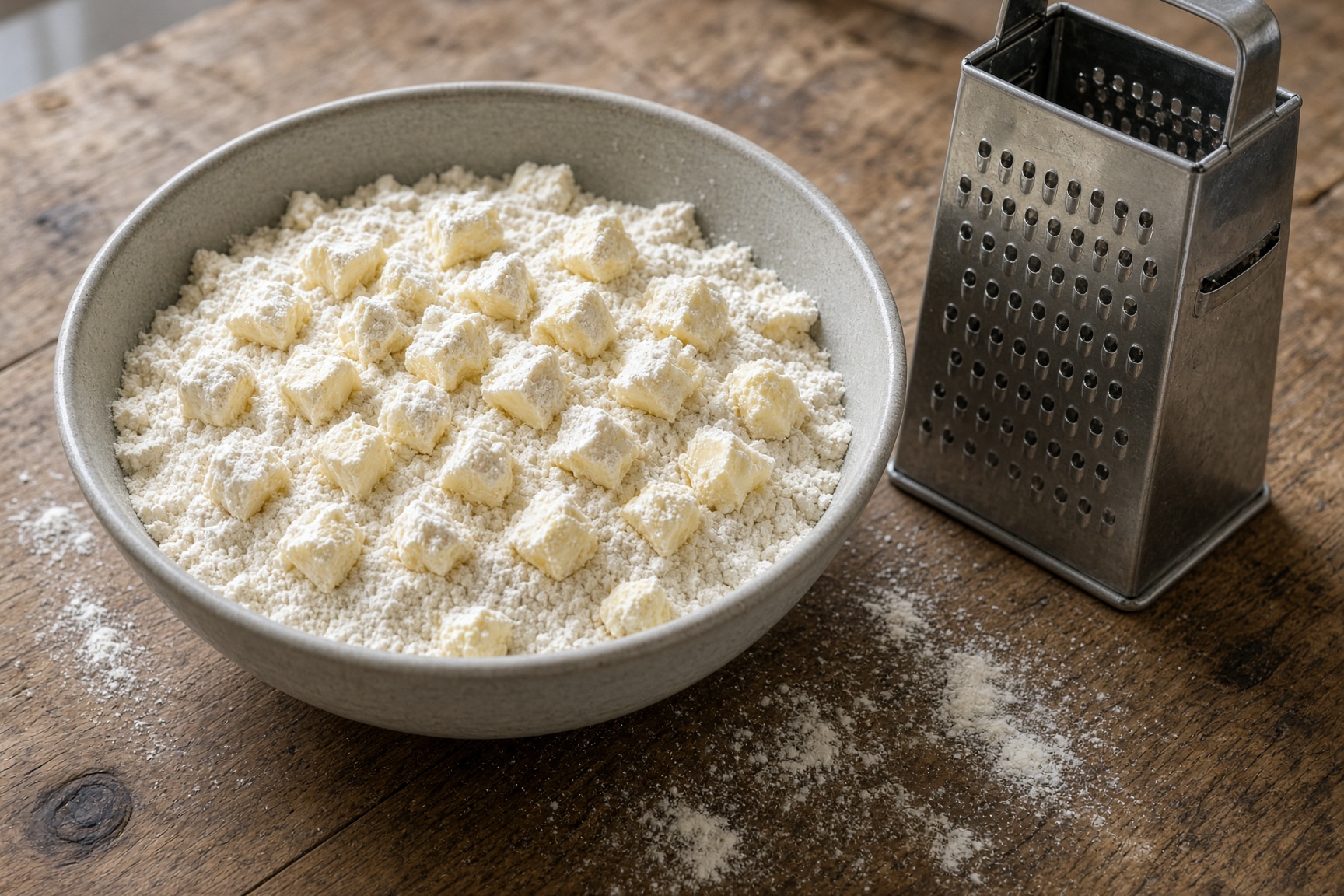
The cast-iron buttermilk biscuits on this site say to grate the cold butter into the flour, or cut it in, until the pieces are the size of peas. You should still see them. They should be dusty with flour, not shiny puddles. If the kitchen is hot, grate the butter and freeze it for ten minutes before it meets the flour. Freeze the flour too if the house is miserable. Buttermilk goes in cold. A warm liquid finishes the melting you were trying to avoid.
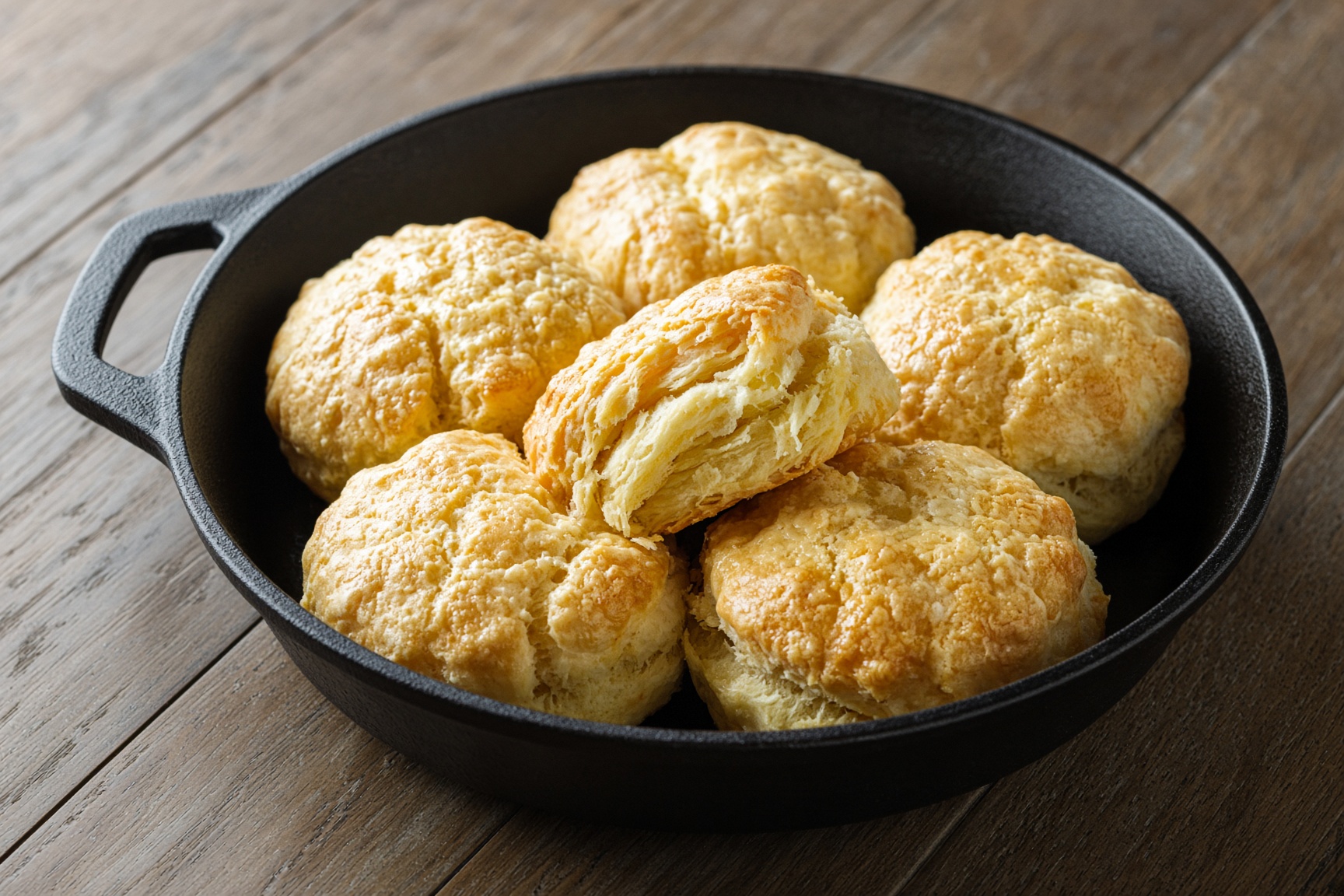
The fold is the other half. Pat the dough, fold it like a letter, pat, and fold once more. That stacks the pieces. Then stop. A smooth, springy dough is bread dough. Biscuit dough should look shaggy and a little rough. The recipe bakes them in a hot skillet at 425°F, sides touching, so they rise up instead of spreading into stones.
- Butter you can still see, about the size of peas: right.
- Butter smeared into the flour, no pieces left: too warm. Chill what you can, or start over if it is a paste.
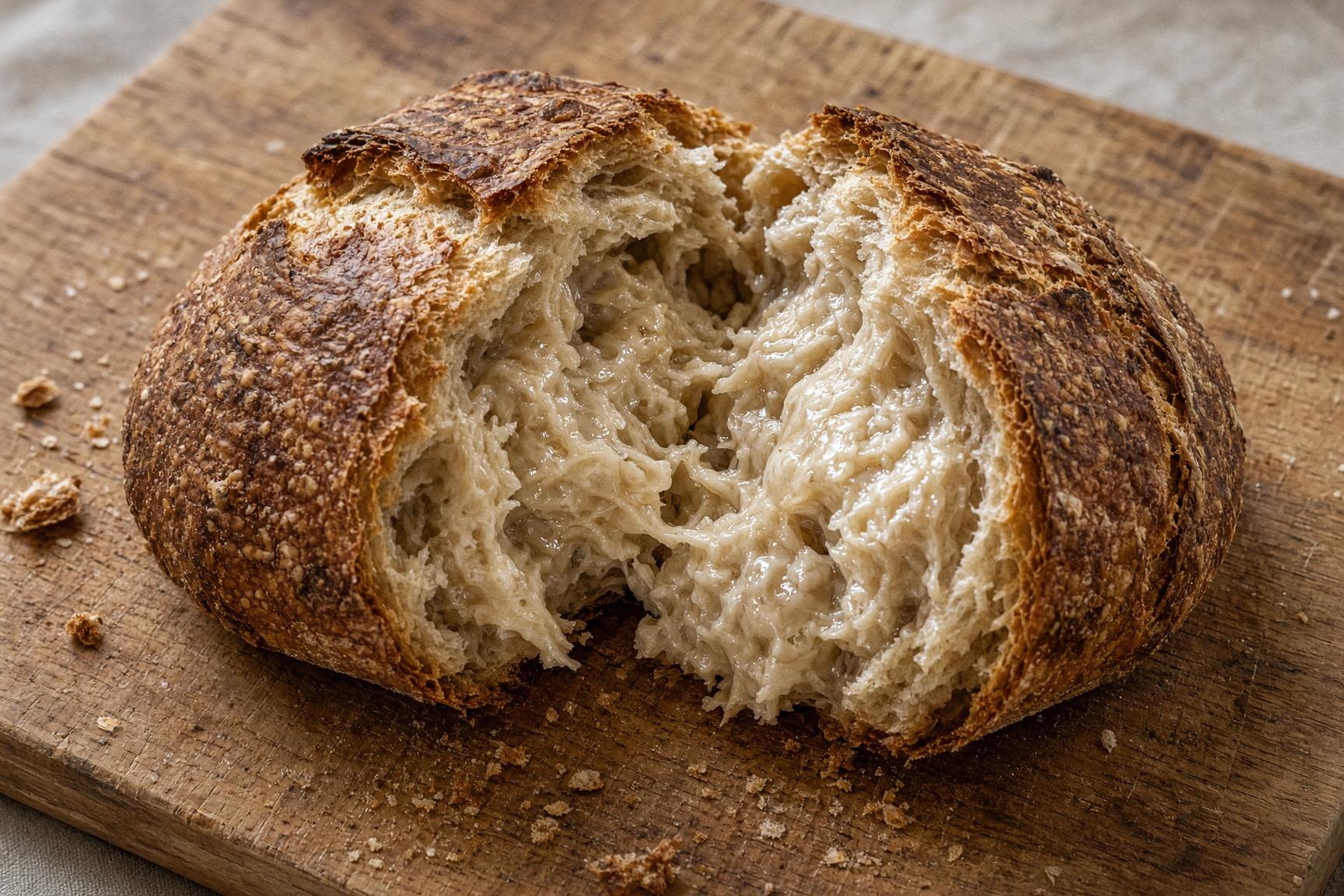
- A dough you kneaded until it felt like bread: you built gluten and lost the flake.
- A pale, gummy middle: another two minutes in the oven. The recipe is plain about that.
Gravy will cover a short biscuit. It will not make layers that were never there. Keep the butter cold until the pan is hot. That is the whole trick, and it is enough.